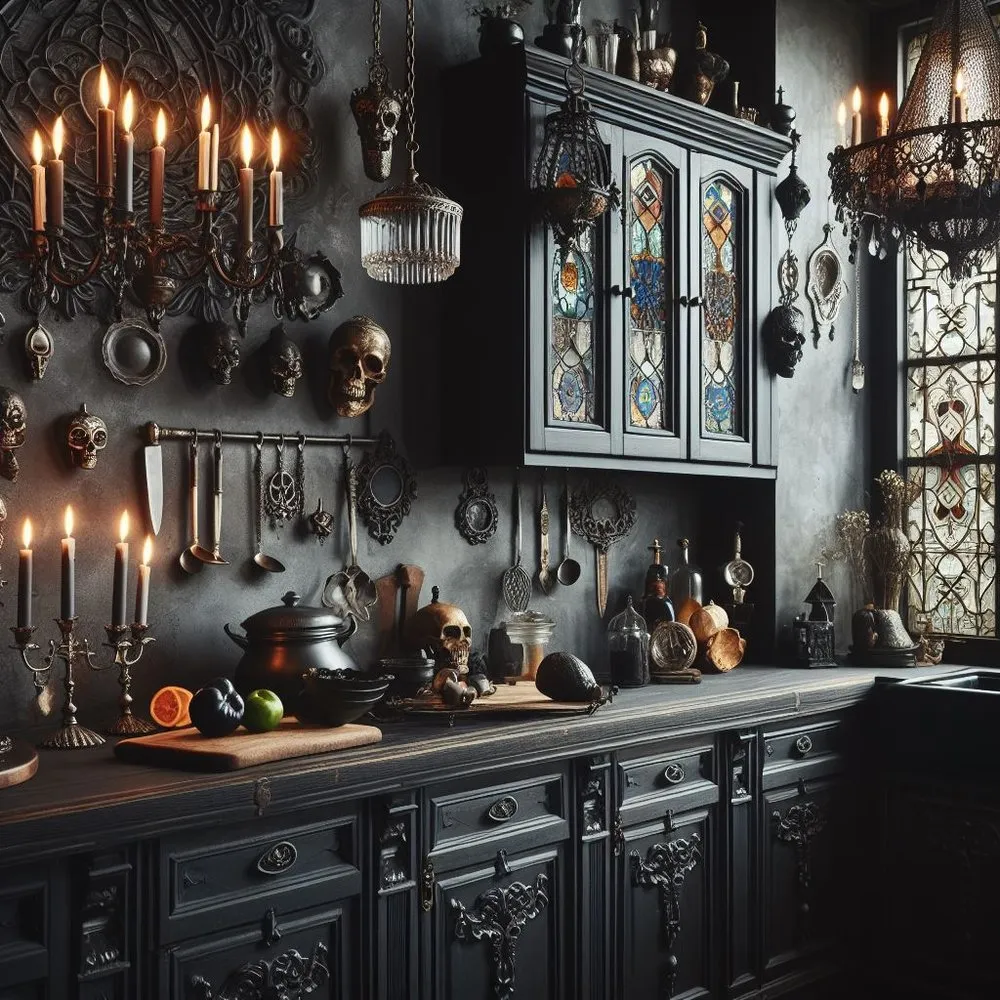
Embracing Gothic Kitchen Decor
Transforming your kitchen into a Gothic-inspired space is a bold and exciting design choice. Gothic kitchen decor ideas evoke a sense of history, mystery, and drama, creating a unique and captivating atmosphere. The style is characterized by its dark color palettes, intricate details, and a touch of the macabre, offering a stunning alternative to more conventional kitchen designs. This article will guide you through the top 5 design ideas to bring your gothic kitchen dreams to life, focusing on key elements and providing practical tips for achieving this captivating aesthetic.
The Allure of Gothic Design
Gothic design, originating from medieval architecture, is known for its pointed arches, ribbed vaults, and ornate detailing. In the kitchen, these elements can be adapted to create a space that feels both elegant and mysterious. The gothic style isn’t just about the dark; it’s about creating a feeling of grandeur and history. Incorporating Gothic elements into your kitchen will create a timeless and unique space.
Key Elements of Gothic Style

Several key elements define Gothic design. These include rich, dark color schemes; the use of natural materials like wood and stone; intricate architectural details; and dramatic lighting. By understanding these core components, you can successfully integrate them into your kitchen decor, creating a cohesive and visually stunning space. Consider the interplay of light and shadow, the textures of the materials, and the overall ambiance you wish to achieve.
Design Idea 1 Dark and Dramatic
The foundation of any Gothic kitchen lies in its color palette. Dark, dramatic hues like deep blacks, charcoal grays, and rich burgundies create the perfect backdrop for Gothic elements. This creates a sense of mystery and sophistication that defines the gothic aesthetic. To avoid making the space feel too enclosed, consider using lighter accent colors or strategic lighting to balance the darkness. This approach keeps the space from feeling too oppressive and allows the intricate details to shine.
Selecting Deep Color Palettes
When selecting your color palette, choose shades that evoke a sense of depth and drama. Consider using blacks, deep greens, or even a dark navy. These colors will create a moody atmosphere, perfect for a Gothic kitchen. Incorporate these colors on your walls, cabinets, and even your appliances. Using these colors doesn’t mean the kitchen has to feel small. Properly placed lighting and strategic use of metallic accents can counteract this and enhance the overall effect.
Incorporating Dark Wood Finishes

Dark wood finishes are essential in achieving the Gothic look. Incorporate dark wood cabinets, flooring, or even exposed beams. The rich texture of the wood adds warmth and visual interest. Consider using woods such as mahogany, walnut, or even a dark-stained oak. This provides a stark contrast against lighter elements, if used, or complements the darker colors perfectly. This creates a sense of historical depth and adds to the gothic ambiance of the kitchen.
Design Idea 2: Architectural Details
Gothic architecture is known for its dramatic details. Incorporating these elements into your kitchen design can dramatically transform the space. Consider arched doorways, pointed windows, and intricate molding to add a touch of Gothic elegance. The more authentic your elements, the more the kitchen embodies the essence of this design choice. This will create a visually stunning and authentic Gothic kitchen space.
Arched Doorways and Windows
Arched doorways and windows are a classic Gothic element. If your kitchen layout allows, consider incorporating arched doorways or windows. This architectural detail immediately adds character and sophistication. If a full arch isn’t feasible, consider using arched trim or mirrors to capture the same effect. This distinctive feature creates an instant Gothic vibe.
Adding Stone and Brick Accents

Stone and brick accents are perfect for creating a sense of history and depth in your Gothic kitchen. Exposed brick walls, stone backsplashes, or even a stone fireplace can add texture and visual interest. The natural, raw look of these materials complements the dark color palette and adds to the overall dramatic effect. Adding stone and brick immediately adds depth and dimension to the kitchen.
Design Idea 3 Dramatic Lighting
Lighting is crucial in a Gothic kitchen, as it sets the mood and highlights the design elements. Choose dramatic lighting fixtures that complement the overall style. Consider chandeliers, candle-style sconces, and dimmable lights to create a dramatic and inviting atmosphere. Proper lighting can create the feeling of mystery and intrigue.
Chandeliers and Candle-Style Lighting
Chandeliers and candle-style lighting fixtures are perfect for a Gothic kitchen. Choose ornate chandeliers with dark finishes or intricate designs. Candle-style sconces can be placed on walls or above the kitchen island to add a romantic touch. These lighting choices provide both functionality and aesthetic appeal, enhancing the overall Gothic atmosphere of the space.
Using Dimmer Switches to Set the Mood

Dimmers are essential for controlling the lighting and creating the right ambiance in your Gothic kitchen. Use dimmers on your main light fixtures to adjust the brightness according to your mood and the time of day. This allows you to create a warm, inviting atmosphere in the evening or a brighter, more functional space during the day. This versatility is key to the appeal of the Gothic style.
Design Idea 4 Gothic-Inspired Furniture
Furniture choices play a crucial role in completing the Gothic look. Choose furniture pieces that reflect the Gothic style. Select ornate cabinetry, Gothic-style tables, and chairs to create a cohesive and visually stunning space. Make sure that the style matches the room’s architecture and the overall design of the kitchen. Your furniture choices will help you achieve a fully Gothic kitchen.
Choosing Ornate Cabinetry
Ornate cabinetry is a must-have in a Gothic kitchen. Choose cabinets with intricate carvings, dark finishes, and unique hardware. Consider using glass-front cabinets to display your fine china or decorative items. The ornate details and quality of the cabinetry will add to the kitchen’s elegance and character. Select cabinetry that will create a sense of history and drama.
Selecting Gothic-Style Tables and Chairs

Select Gothic-style tables and chairs to complete the look. Look for pieces with dark wood finishes, high backs, and intricate detailing. Consider a dining table with a carved base or chairs with velvet upholstery. Your choice of seating arrangements should enhance the overall Gothic atmosphere of your kitchen space. These details will help create a cohesive space and make it feel complete.
Design Idea 5 Accessorizing with Gothic Elements
Accessories are the finishing touches that bring a Gothic kitchen to life. Incorporate religious and mystical symbols, antique decorative items, and other Gothic-inspired elements to create a cohesive and visually stunning space. These details will help you complete the Gothic look, allowing you to personalize the kitchen.
Incorporating Religious and Mystical Symbols
Incorporate religious and mystical symbols to add authenticity and depth to your Gothic kitchen. Consider adding crosses, gargoyles, or other Gothic-inspired art. The use of these details provides depth and meaning, helping to fully embrace the essence of the Gothic style. Remember, these elements are meant to reflect the historical origins of the style.
Using Antique Decorative Items

Antique decorative items are perfect for creating a sense of history and mystery in your Gothic kitchen. Display antique candlesticks, mirrors, or other decorative items to add character and visual interest. Shop at antique stores or flea markets for unique finds. These pieces will complement the dark color palettes and ornate details.
Conclusion
Creating a Gothic kitchen is a rewarding design project that allows you to express your unique style. By incorporating the top 5 design ideas, from dark color palettes and architectural details to dramatic lighting and Gothic-inspired furniture, you can transform your kitchen into a captivating and unforgettable space. Remember to focus on creating a balance between dark and light, detail and simplicity, to achieve a cohesive and visually stunning Gothic kitchen. The key to successfully achieving a Gothic kitchen lies in its details, bringing your personal touch to the design.